Buying Guides
Published August 18, 2025
12 minDo You Need Better Pressure Relief From Your Mattress?
Understanding how the right mattress eliminates pain and improves sleep quality
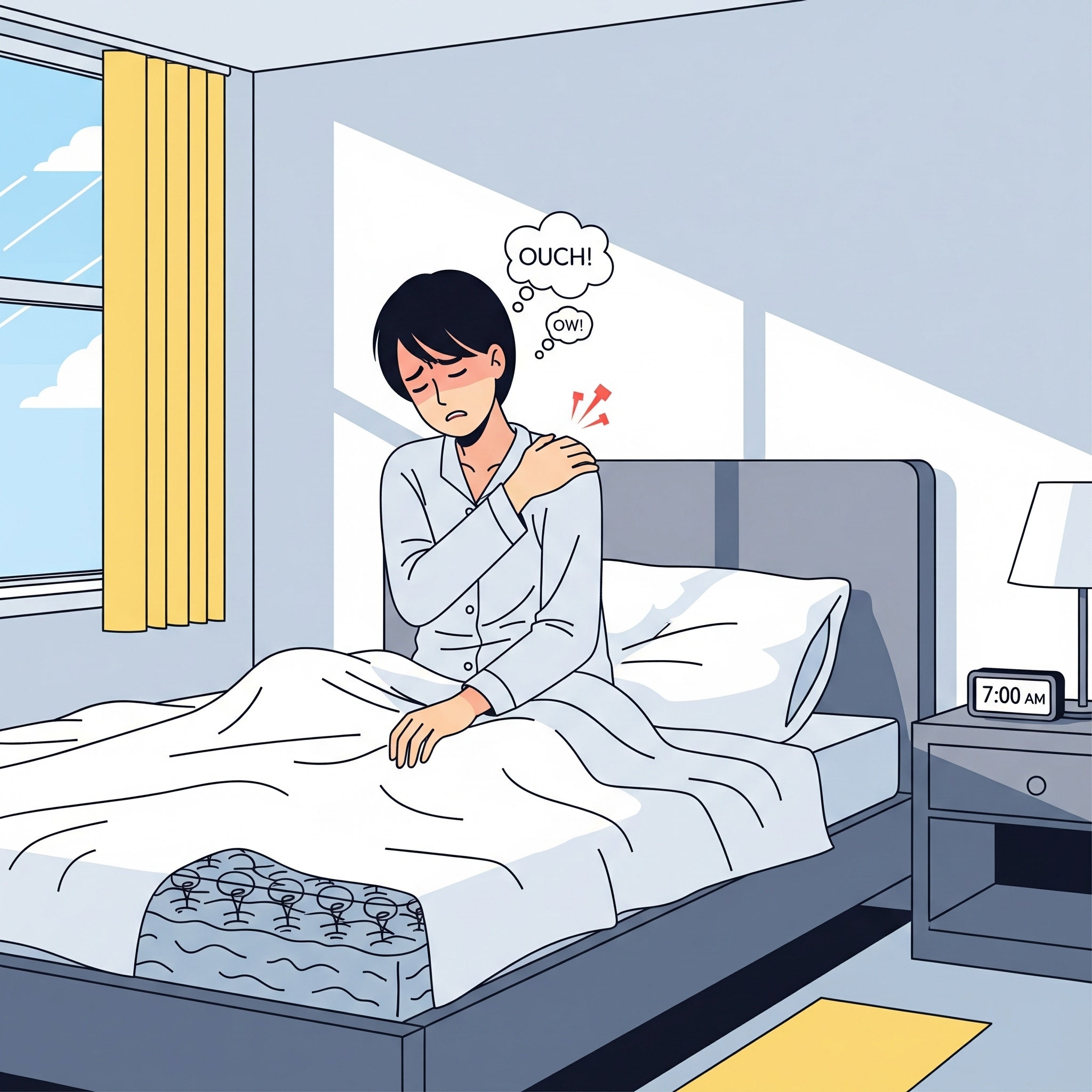
Table of contents
Understanding pressure points on your bodyWhat do pressure points do to your sleep quality?The science behind pressure relieving mattressesTypes of pressure relieving mattressesGet the firmness right for your sleep positionCreating your personal pressure point mapThe role of mattress firmness in pressure reliefPressure relief beyond your mattressFrequently Asked Questions About Edge Support
Ever wake up with that familiar pins-and-needles feeling in your shoulder? Or maybe it's an achy hip that has you tossing and turning all night, searching for that elusive comfortable position. If you're nodding along, your mattress is not doing its job when it comes to pressure relief. Pressure relief isn't just some fancy mattress marketing term. It's actually the foundation of getting the restorative sleep your body craves and deserves. When you understand how pressure points work and what causes them, choosing the right mattress becomes so much clearer.Let's dive into why pressure relief is so important when it comes to getting the restorative sleep you deserve.
Not sure which mattress fits you best? Find out now.
Understanding pressure points on your body
Think about the shape your body makes when you're lying down. Pressure points are the areas where your body naturally sticks out, and makes the most contact with your mattress surface. The common pressure points most people experience include:- Shoulders: Especially problematic for side sleepers
- Hips: Bears significant weight, regardless of sleep position
- Lower back: Vulnerable when your spine isn't properly aligned
- Head and neck: Critical for preventing morning headaches
What do pressure points do to your sleep quality?
Pressure points can turn what should be peaceful rest into a nightly struggle. When pressure builds up in these sensitive areas, several things happen:- First, the pressure compromises your blood circulation. Think of it like sitting on your foot for too long – that uncomfortable tingling sensation is your body's alarm system. Now imagine that happening while you're trying to sleep.
- Second, your muscles can't fully relax. Instead of releasing the day's tension, they remain partially contracted to protect those pressure-sensitive areas. This means you wake up feeling just as tense as when you went to bed.
- Finally, and perhaps most importantly, pressure points interrupt your sleep cycles. Every time you unconsciously move to relieve pressure, you're pulling yourself out of deeper sleep stages. It’s a subtle shift – you might not fully wake up, but you're definitely not getting quality rest.
The science behind pressure relieving mattresses
So what is a pressure relieving mattress, exactly? At its core, it's a mattress that’s designed to distribute your body weight evenly across its entire surface, preventing any single area from bearing too much load (or pressure!). Pressure relieving mattresses work through a combination of materials and construction techniques. The key is creating a surface that responds to your body's unique shape and weight distribution. When you lie down, your mattress should cradle your curves while maintaining proper spinal alignment – it's a delicate balance that makes all the difference.Types of pressure relieving mattresses
Not all pressure reducing mattresses are created equal. Understanding the different types can help you make an informed decision:Memory Foam MattressesMemory foam responds to heat and pressure, creating a personalized contour that supports every curve of your body. It also returns to its original shape when you move, so your body gets consistent support throughout the night.Hybrid MattressesCombining the pressure-relieving benefits of foam with the responsive support of innersprings, hybrid mattresses offer the best of both worlds. They're particularly great if you want pressure relief but don't love the "hugging" sensation of pure memory foam.Mattresses with Zoned SupportThese innovative designs feature different support levels in different areas of the mattress: stronger support where you need it (like your lower back) and softer cushioning for pressure points (like shoulders and hips). Zone support is available for both memory foam and hybrid mattresses.Get the firmness right for your sleep position
When it comes to pressure relief, your sleep position is everything. What feels perfect for a side sleeper could create new pressure points for a stomach sleeper—and vice versa.Here's what to look for based on how you actually sleep:Side sleepers: medium-soft to medium (4-6/10) with strategic contouring If you're a side sleeper, you're dealing with the most challenging pressure point situation. Your shoulders and hips are bearing concentrated weight all night long, and research shows this can create pressure levels exceeding 32 mmHg—enough to seriously restrict blood flow.You need a mattress that lets your shoulders and hips sink in just enough to keep your spine aligned, while still providing gentle, even support. Memory foam and hybrid mattresses with substantial comfort layers (we're talking at least 3-4 inches of pressure-relieving material) work particularly well here.Back sleepers: medium to medium-firm (5-7/10) with balanced contouring Back sleepers need that sweet spot between contouring comfort and structural support. You want enough give to support your spine's natural curves—especially that lower back curve—without so much sinking that you end up with back pain.Stomach sleepers: medium-firm to firm (6-8/10) with responsive support Stomach sleeping can be tricky because this position naturally wants to create pressure points in your lower back, chest, and neck. The key is finding a mattress that provides enough support to keep your hips aligned with your shoulders while still offering some pressure point relief.Look for responsive materials that won't let your midsection sink too deeply—which can strain your lower back and create entirely new pressure points.Combination sleepers: medium (5-6/10) with responsive materials If you're constantly switching positions, you need a mattress that works across all sleep styles. This means finding that careful balance between contouring comfort and responsive support that makes position changes easy.Comparison Chart: Sleep Position, Pressure Points, and Mattress Features
| Sleep Position | Firmness Level(scale of 1–10) | Primary Pressure Points | Key Mattress Features |
|---|---|---|---|
| Side Sleeper | Medium-soft to Medium (4–6) | Shoulders, hips, knees | Deep contouring, 3–4+ inches comfort layers, excellent motion isolation |
| Back Sleeper | Medium to Medium-firm (5–7) | Lower back, shoulders, tailbone | Balanced contouring, spinal alignment |
| Stomach Sleeper | Medium-firm to Firm (6–8) | Lower back, chest, neck | Responsive support, minimal sinking, proper hip alignment |
| Combination Sleeper | Medium (5–6) | Variable based on position | Easy movement, consistent support, responsive materials |