Buying Guides
Published August 11, 2025
16 minThe Ultimate Guide to Mattress Edge Support
Why edge support matters, how it works, and what you should look for when shopping for your next mattress
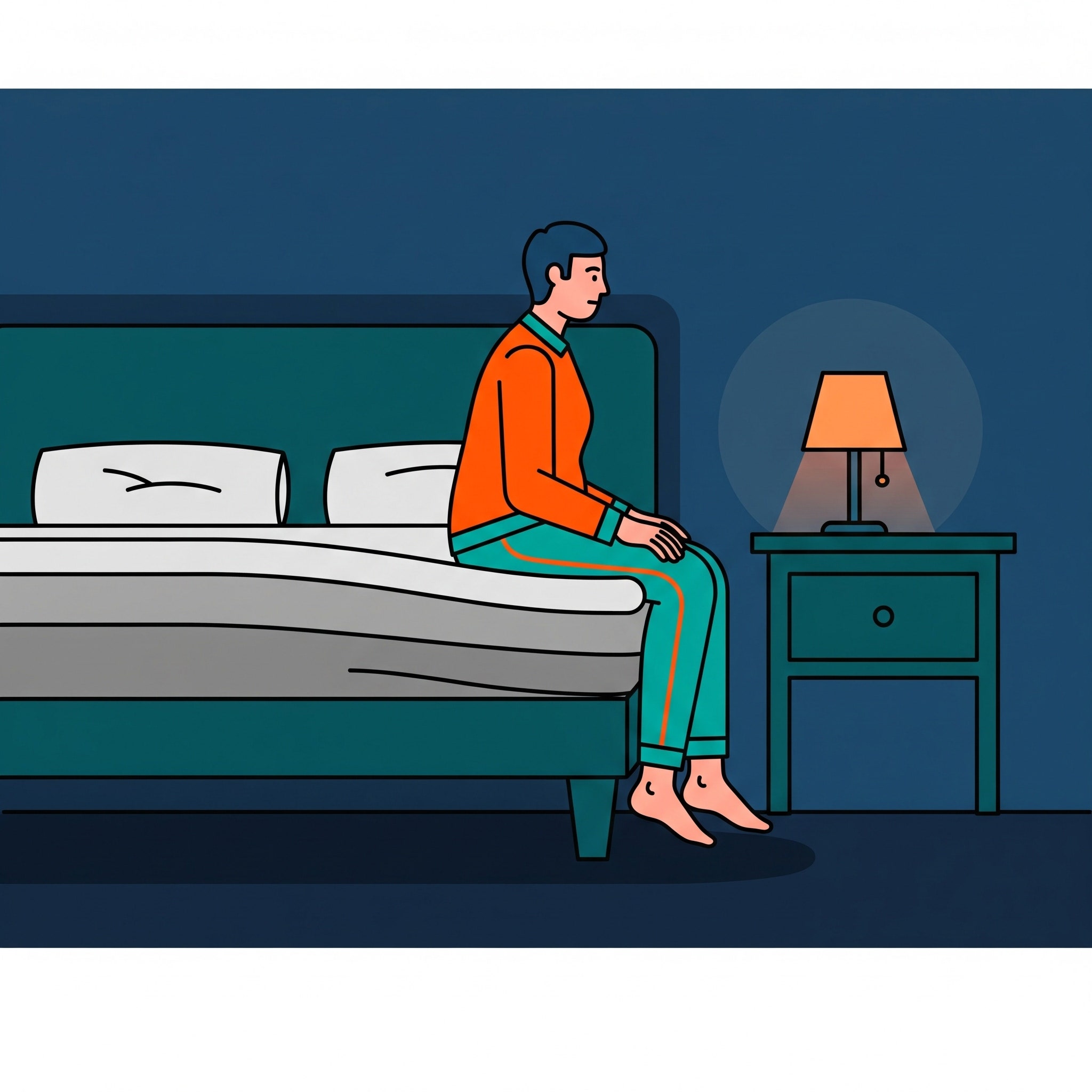
Table of contents
What is Edge Support? How mattress construction affects edge support performanceEdge Support by Mattress Type: Comparison TableHow to Test Edge Support When Shopping for Mattresses Your Sleep Style, Edge Support, and Finding the Right Mattress Common Edge Support Problems and SolutionsEdge Support and Mattress Size How Edge Support Affects Other Mattress Features Frequently Asked Questions About Edge Support and Mattress Stability
Have you ever felt like you might roll right off your mattress when getting too close to the edge? Or maybe you've noticed that the sides of your bed feel less supportive, pushing you towards its center. If you're nodding "yes," your mattress's edge support is likely the culprit.Edge support is a crucial mattress feature that you might not think about until it's missing. This guide will walk you through why edge support matters, how it works, and what you should look for when shopping for your next mattress.
Not sure which mattress fits you best? Find out now.
What is Edge Support?
Edge support refers to your mattress's ability to maintain its shape and resist sagging around the perimeter when you sit, lie, or put weight near the edges.Research shows that poor edge support can reduce your usable sleep surface by up to 15%, making your queen-size bed feel more like a full.When your mattress has strong edge support, you're getting better stability and more space. So you can sprawl out, stretch your legs, and use every inch of the surface you paid for.The safety factor is equally important, whether you're a parent getting up for late-night feedings or an older adult who needs stable support when getting in and out of bed.Here are some of the benefits of having a mattress with strong edge support:Easier Entry and Exit for Adults with Mobility Concerns
Approximately 34% of adults over 65 report difficulty getting out of bed as a daily challenge. A mattress with poor edge support only makes this worse, creating an unstable surface right when you need reliability most.Physical therapists consistently recommend mattresses with strong edge support for anyone with joint issues or mobility concerns. When the edge of your bed provides a stable platform, it's easier to transition from sitting to standing without putting extra strain on your knees, hips, or back.Durability and Sag-Resistance
The average mattress lasts about 6.5 years, but mattresses with poor edge support often start showing their weak spots much sooner. Those edges are typically the first to go, creating an uneven sleep surface that can force you to replace your mattress years earlier than necessary.When you choose a mattress with reinforced edges, you're investing in longevity. Quality edge support helps your entire mattress maintain its shape and support characteristics for years longer.More Space for Couples and Shared Sleeping
When two people share a bed, edge support prevents both sleepers from rolling toward the center and ensures each person can use their full side of the mattress.How mattress construction affects edge support performance
So what actually makes some mattresses excel at edge support? It comes down to materials and construction.Foam Mattresses: Reinforced Perimeters and Zoned Constructions
One of the most effective approaches involves using high-density foam around the mattress perimeter. We're talking about foam with a density of at least 1.8 pounds per cubic foot—significantly firmer than the comfort layers in the center of the mattress.These foam rails create what's essentially a "seat edge" around your mattress. Here's a quick test you can try: press down on the outer 3 inches of any mattress you're considering. If it immediately collapses or feels dramatically different from the center, that's a red flag for poor edge support.Newer memory foam mattresses have taken this concept even further by developing specialized foam formulations that provide edge stability without sacrificing the pressure relief and contouring that make memory foam so comfortable.Traditional memory foam mattresses have historically struggled with edge support because they relied primarily on foam density for perimeter stability. The viscoelastic properties that make memory foam excellent for pressure relief and contouring can create challenges for maintaining firm, stable edges.But technology - and the mattress industry - have evolved. Modern foam mattresses incorporate high-density foam borders, specialized foam formulations, and multi-layer construction techniques that improve edge performance.Some advanced designs use zoned construction, where different areas of the mattress have varying firmness levels. This allows for softer, more contouring foam in the center sleep areas while providing firmer, more supportive foam around the perimeter for enhanced edge stability.Hybrid Mattresses: Pocketed Coils for Enhanced Stability
Hybrid mattresses have a natural advantage when it comes to edge support, thanks to their coil systems. The best designs use pocketed coils with thicker gauge wire (typically 13-14 gauge) around the perimeter, creating a reinforced border that resists compression.Quality hybrid designs use individually wrapped coils that not only provide targeted support where you need it but also promote airflow to keep you cool throughout the night.The coil system in hybrid mattresses provides several edge support benefits. First, the spring mechanism naturally resists compression, providing more pushback than foam alone. Second, the perimeter coils can be engineered with different specifications than the center coils, allowing for customized edge support without compromising comfort in the main sleeping area.Many hybrid designs also incorporate foam encasement around the coil system, which serves dual purposes: it prevents the coils from shifting over time and provides additional edge reinforcement. This combination of responsive coils and supportive foam creates some of the most effective edge support available in modern mattresses.Edge Support by Mattress Type: Comparison Table
Here's a quick summary of how the different mattress types stack up in edge support:| Mattress Type | Edge Support Approach | Typical Performance | Construction Method |
|---|---|---|---|
| Traditional Memory Foam | Foam density and borders | Fair to Good | High-density perimeter foam |
| Hybrid | Multi-approach engineering | Excellent | Coils + foam reinforcement |
| Latex Foam | Natural resilience + borders | Good | Responsive foam properties |
| Innerspring | Reinforced perimeter coils | Good to Excellent | Additional/stronger edge coils |
How to Test Edge Support When Shopping for Mattresses
Evaluating edge support doesn't have to be complicated. Whether you're shopping in-store or taking advantage of a sleep trial period, here are some simple ways to see how well a mattress holds up around the edges.1. Sit at the Edge
One straightforward way to evaluate edge support is the 'sit test.' When you sit on the mattress edge, pay attention to how much you sink and whether the surface feels stable. Good edge support should limit sinkage to less than 3 inches and provide a secure feeling.This test simulates real-world use such as sitting on your bed to put on shoes, read, or just take a moment to start your day. If the edge feels unstable or collapses significantly, that's a clear indicator of poor edge support.2. Consider Your Sleep Style/Position
Try lying near the edge of the mattress in your typical sleep position. You should feel secure without any sensation of rolling off or instability. This is especially important for combination sleepers who might find themselves near the mattress perimeter during the night.Also pay attention to whether your spine stays properly aligned even when you're not perfectly centered on the mattress. Good edge support maintains consistent comfort and support across the entire sleeping surface.3. Look for Durability Features
Look for construction features that suggest durability over time. High-density foam perimeters, reinforced coil systems, and quality materials are all indicators that edge support will maintain its performance for years rather than degrading quickly under regular use.Remember that edge support is often the first feature to fail in lower-quality mattresses, so investing in proven construction methods can save you from early replacement costs.Your Sleep Style, Edge Support, and Finding the Right Mattress
Let's be honest—edge support is important, but it's not the only thing that matters for a great night's sleep. You need to find a mattress that works with your specific sleep style, body type, and preferences.Get the firmness right for your sleep position
When it comes to firmness, what feels perfect for your sleep position should also work well with edge support.Here's what to look for based on your sleep style:- Side sleepers: Look for medium-soft to medium (4-6/10) with reinforced edges that won't create pressure points on your shoulders and hips
- Combination sleepers: Medium to medium-firm (6-7/10) provides the versatility you need while maintaining edge stability
- Back and stomach sleepers: Medium-firm to firm (7-8/10) offers the support you need without sacrificing edge performance