Bedding
Published November 14, 2025
9 minMattress Topper vs Mattress Pad vs Mattress Protector: What's the Difference?
We break it all down, so you can find the right product for you.
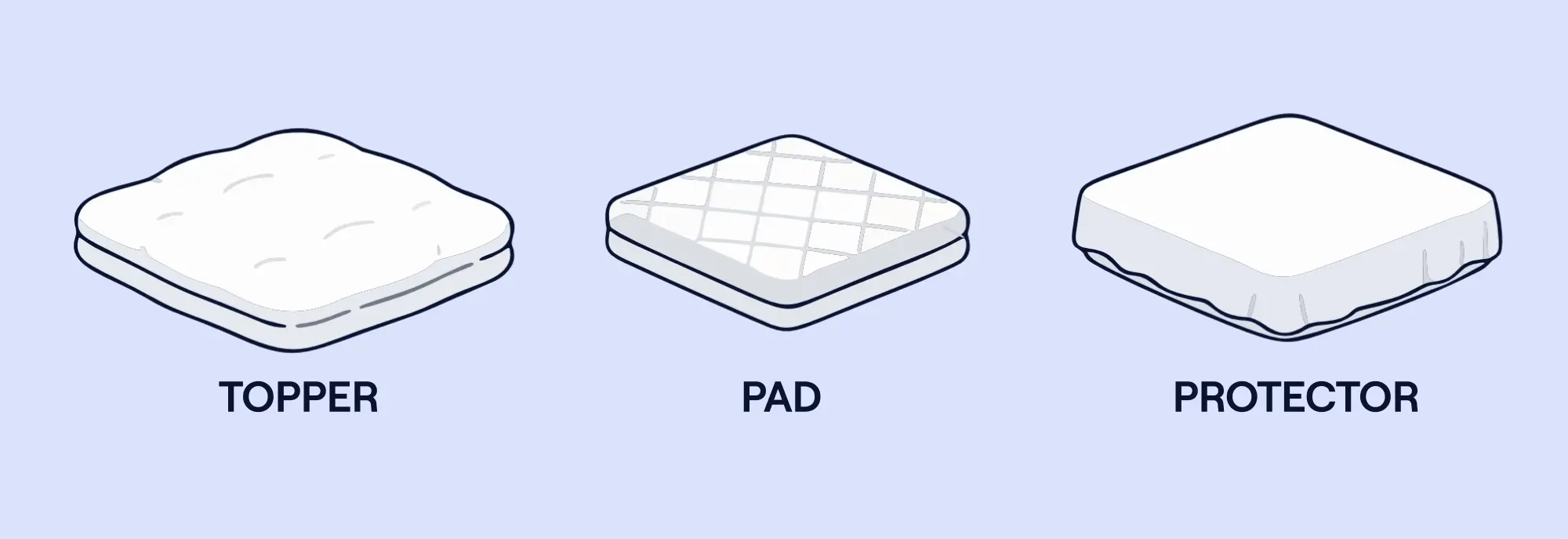
Table of contents
What Is a Mattress Pad?Understanding Mattress ToppersMattress Protectors: Protection FirstKey Comparison at a GlanceWhen You Need a Mattress TopperWhen a Mattress Pad Makes SenseWhen You Need a Mattress ProtectorUsing Multiple Products TogetherMaking the Right ChoiceCare and MaintenanceThe Bottom Line
Shopping for bedding accessories can be confusing. When you're looking at mattress toppers, pads, and protectors, it's natural to wonder what the actual difference is. Which one do you really need?The truth is, these three products serve distinct purposes, even though they sound incredibly similar. Understanding what each one does will help you make smarter choices about protecting your mattress and improving your sleep quality.Let's break down each option so you can make an informed decision about what's right for your sleep setup.
Keep in mind that adding multiple layers can make fitting your sheets more challenging. If you're using both a topper and a pad, you may need deep-pocket sheets to accommodate the extra height.
Not sure which mattress fits you best? Find out now.
What Is a Mattress Pad?
A mattress pad sits somewhere between a topper and a protector. Typically ranging from ½” to 1” in thickness, these products add a modest layer of cushioning while providing some protection for your mattress.Mattress pads won't dramatically change how your mattress feels, but they do add a touch of extra softness. Most are quilted with materials like cotton, polyester, or a blend of both. The quilted construction creates a layer of padding that adds a bit of plushness to your sleep surface without fundamentally altering the feel of your mattress.What Mattress Pads Do Well
While they're primarily designed to add comfort, mattress pads also offer light protection against everyday wear. They can help absorb moisture and protect against minor spills, though they're not as effective as dedicated protectors in this regard.Many mattress pads also help with temperature regulation. Cotton pads are naturally breathable and can help wick away moisture, while some specialized pads feature cooling materials or moisture-wicking technology designed to keep you comfortable throughout the night.The Limitations of Mattress Pads
It's important to understand what mattress pads don't do. They won't provide significant protection against major spills or accidents – if you spill a full glass of water, it’s likely some liquid will reach your mattress. They also won't dramatically change the firmness level of your bed or provide substantial pressure relief if you're dealing with chronic pain or discomfort.Think of a mattress pad as a middle-ground solution: it adds a bit of comfort and a bit of protection, making it a good choice if you want both benefits without committing to separate products.Understanding Mattress Toppers
Mattress toppers are substantially thicker than pads, typically measuring between 2 to 4 inches. These layers can genuinely transform how your mattress feels - making a too-firm bed more comfortable or helping restore support to an aging mattress.Unlike pads, toppers are specifically designed to modify the comfort and support characteristics of your existing mattress. They're a cost-effective way to extend the life of your mattress or customize feel without having to buy a completely new bed.Types of Mattress Toppers
Toppers come in various materials, each with distinct properties:Memory foam toppers contour to your body for pressure relief and spinal alignment. They respond to body heat and weight, creating a cradling effect that can significantly reduce pressure points at your shoulders and hips. Memory foam toppers work particularly well for side sleepers who need extra cushioning.Latex toppers offer responsive support with natural cooling properties. Unlike memory foam, latex has more bounce and doesn't retain as much heat. Natural latex is also hypoallergenic and resistant to dust mites, making it a good choice for allergy sufferers.Down or down-alternative toppers provide plush softness for those who prefer a cloud-like sleeping surface. These toppers add a luxurious, hotel-bed feel to your mattress, though they provide less targeted support than foam options.Wool toppers naturally regulate temperature with moderate cushioning. Wool is excellent at wicking moisture and maintaining a comfortable sleep temperature year-round, keeping you cool in summer and warm in winter.When a Topper Makes Sense
A quality mattress topper addresses specific sleep issues. If your mattress is too firm, a memory foam topper adds pressure-relieving softness. If your mattress has softened over time and you're starting to feel like you're sinking too much, a firmer one can restore support without needing to replace your entire mattress.Toppers are also useful if you just want some extra customizability. They’re great for those goldilocks moments – giving you the option to add just a touch of softness or support.Check out Nectar’s collection of mattress toppers, which help you find your perfect feel.Mattress Protectors: Protection First
A mattress protector focuses on protection rather than comfort. These thin barriers - usually less than ½” thick - shield your mattress from spills, stains, dust mites, allergens, and general wear.Modern protectors – like Nectar’s – use advanced materials that block liquids while allowing airflow, so you won't feel like you're sleeping on plastic. It’s a significant improvement over those crinkly, uncomfortable mattress protectors you might remember from years ago.Types of Mattress Protectors
When shopping for a mattress protector, you’ll likely find two main styles: fitted protectors that work like a fitted sheet, and encasement protectors that zip around your entire mattress for total coverage.Fitted protectors are easier to put on and take off, making them more convenient for regular use. Encasement protectors provide more comprehensive protection and are particularly useful if you're dealing with bed bugs or want maximum allergen protection.Why Protectors Matter
Many mattress warranties require the use of a protector to remain valid. Stains from spills or bodily fluids can void your warranty, making a protector a smart investment for protecting both your mattress and your warranty coverage.But a mattress protector’s benefits go far beyond warranty considerations. They create a hygienic barrier between you and your mattress, one that you can clean regularly. Over time, mattresses accumulate dead skin cells, dust mites, sweat, and other debris. A washable protector means you don’t have to worry about deep-cleaning your actual mattress to keep it clean.For households with kids, pets, or anyone dealing with allergies, a quality protector is essentially non-negotiable. The relatively small investment in a protector can save you from having to replace an expensive mattress due to damage or allergen buildup.Key Comparison at a Glance
We’ve gone through their different benefits and uses, but let’s get this information at a glance. Here's how mattress protectors, mattress pads, and mattress toppers compare:| Mattress Topper | Mattress Pad | Mattress Protector | |
| Thickness | 2” - 4” | ½” - 1” | Less than ½” |
| Primary Purpose | Adjusts the feel of your mattress | Adds light comfort and some protection | Offers maximum protection |
| Price Range | A higher investment | Mid-range | Most affordable |
| Maintenance | Spot clean or professional cleaning | Commonly machine washable (check care instructions) | Machine washable |
| Lifespan | 3-5 years with proper care | 1-3 years, depending on quality | 2-3 years with regular washing |
When You Need a Mattress Topper
Consider a mattress topper if:- Your mattress is too firm or too soft for your comfort
- You're experiencing pressure points or waking up with pain
- You want to extend your current mattress life before replacing it
- You're dealing with an older mattress that's lost some support
- You sleep hot and want cooling comfort layers
When a Mattress Pad Makes Sense
A mattress pad works well when:- You want slightly more comfort without changing your mattress feel
- You need light protection and added softness
- You're looking for temperature regulation
- Budget is a consideration
- You want something easy to wash regularly
- You're setting up a guest room and want to add comfort to a basic mattress
When You Need a Mattress Protector
A protector is essential if:- You have kids or pets
- You suffer from allergies or asthma
- You want to maintain your mattress warranty (many require protectors)
- You value cleanliness and easy maintenance
- You're concerned about bed bugs
- You want to extend the life of your mattress
- You have any medical conditions that might result in accidents
Using Multiple Products Together
You can absolutely combine these products. The most common setup is using a mattress topper for comfort with a protector on top for easy maintenance. This allows you to enjoy the comfort benefits of your topper while keeping both your topper and mattress protected and easy to clean.The typical layering order from bottom to top is:| Fitted sheet | |
| Mattress pad | If using |
| Mattress protector | If using |
| Mattress topper | If using |
| Mattress |