Sleep Health
Published January 6, 2026
9 minThe Ultimate Guide to Humidifier Benefits: Better Sleep Starts With Better Air
How adding moisture to your bedroom could fix the mysterious symptoms you've been blaming on everything else

Table of contents
What Does a Humidifier Actually Do?Why Sleeping With a Humidifier Makes a DifferenceWho Benefits Most From a Bedroom Humidifier?Choosing the Right Humidifier for Your SpaceUsing Your Humidifier EffectivelySigns You Need a HumidifierCommon Concerns and SolutionsCreating Your Complete Sleep EnvironmentThe Bottom Line on Bedroom Humidifiers
Let’s see if any of these sound familiar to you: waking up with a dry, scratchy throat, tight and uncomfortable skin, a stuffy nose, or desperate for your first sip of water. If so, the air in your bedroom might very well be the culprit.Low humidity is one of those sneaky sleep disruptors that often goes unnoticed. You might blame seasonal allergies, an oncoming cold, or just "sleeping poorly," when the real culprit is air that's too dry. The good news? A bedroom humidifier could be the straightforward solution you've been looking for.Let's explore how adding moisture to your bedroom air can transform your sleep quality and overall comfort.
Not sure which mattress fits you best? Find out now.
What Does a Humidifier Actually Do?
At its core, a humidifier is pretty straightforward – it adds moisture to the air around you. But understanding why that matters requires looking at what affects humidity levels in your home in the first place.Your indoor air loses moisture constantly due to:- Winter heating systems: Furnaces and radiators create warmth, but often strip moisture from the air
- Summer air conditioning: AC units cool your space while simultaneously removing humidity
- Home construction: Modern, well-sealed homes trap dry air inside more efficiently than older buildings
- Geographic location: Desert climates naturally maintain lower humidity year-round
Why Sleeping With a Humidifier Makes a Difference
Respiratory Relief and Easier Breathing
Your nose and throat need moisture to function properly. The mucous membranes lining your respiratory system serve as your first line of defense against germs, allergens, and irritants. When these membranes stay moist, they effectively trap invaders before they reach your lungs. When they dry out, that protection weakens significantly.Dry air irritates these protective membranes, making breathing feel uncomfortable. If you notice you catch colds frequently during winter months, low humidity might be contributing to the problem. Research indicates that maintaining proper moisture levels can reduce how long airborne viruses survive in your space — potentially lowering your risk of illness.For those dealing with congestion, a humidifier helps thin mucus, making it easier to clear your airways. You'll spend less time dealing with stuffiness, and more time sleeping comfortably.Better Skin and Hair Health
Your skin constantly loses moisture through evaporation — a process that accelerates dramatically in dry air. While you sleep, your body works to repair and regenerate skin cells, but low humidity undermines this natural healing process.Sleeping with proper humidity levels provides noticeable benefits:- Reduced itching and an uncomfortable, tight feeling
- Fewer visible fine lines (hydrated skin appears plumper)
- Faster healing of cuts, scratches, and irritated areas
- Relief from conditions like eczema and psoriasis
Improved Sleep Quality
When your throat feels scratchy and your nose is congested, quality sleep becomes difficult to achieve. You wake frequently, reach for water repeatedly, and never quite reach the deep, restorative sleep your body needs.Proper humidity supports better sleep by:- Reducing snoring: Moist airways vibrate less, creating less noise for both you and your partner
- Minimizing interruptions: You won't wake as often to clear your throat or drink water
- Enabling deeper rest: Your body can focus on recovery instead of fighting dryness
- Improving comfort: Humid air feels slightly warmer, allowing you to lower the thermostat while staying comfortable
Sinus and Allergy Management
While excessive humidity can encourage dust mites and mold, maintaining the right moisture level actually helps manage allergy symptoms.Proper humidity levels help by:- Weighing down airborne allergens so they circulate less freely
- Soothing irritated nasal passages
- Supporting your body's natural defense mechanisms
- Reducing static electricity that attracts dust to surfaces
Who Benefits Most From a Bedroom Humidifier?
Hot Sleepers
Interestingly, humid air can help you feel cooler. Moisture conducts heat away from your body more efficiently than dry air, creating a subtle cooling effect without requiring intense air conditioning.This means you can maintain a slightly higher thermostat setting while still feeling comfortable. It’s better for your energy bill, and for your overall comfort.Light Sleepers
The gentle white noise a humidifier produces can effectively mask disruptive sounds without being harsh. It's soft and consistent — the ideal background noise for sensitive sleepers who wake easily.Mouth Breathers
If you sleep with your mouth open (whether intentionally or not), you're likely experiencing some extreme dryness. A humidifier provides essential moisture to prevent the severe throat discomfort that makes mornings unpleasant.Choosing the Right Humidifier for Your Space
Not all humidifiers work equally well in every situation. Understanding the differences will help you select the right option for your needs.Types of Humidifiers
Cool Mist Humidifiers disperse room-temperature moisture using ultrasonic technology or evaporation. They're energy-efficient, safe around children and pets, and work well year-round.Warm Mist Humidifiers heat water to create steam before releasing it into the air. They consume more energy but provide particularly soothing moisture during cold winter months.Ultrasonic Humidifiers use high-frequency vibrations to create an ultra-fine mist. They operate very quietly, making them particularly suitable for bedrooms.Evaporative Humidifiers blow air through a wet wick or filter. They're self-regulating—as humidity increases, evaporation naturally slows.Essential Features to Look For
Here are a few key features that you should prioritize when shopping for a humidifier:- Built-in humidistat: Automatically maintains your target humidity level
- Auto-shutoff: Turns off when water runs out, preventing over-humidification
- Quiet operation: Look for models rated under 30 decibels
- Easy-clean design: Wide tank openings and dishwasher-safe components make maintenance manageable
- Appropriate capacity: Match tank size to your room dimensions and desired runtime
Using Your Humidifier Effectively
Proper Placement
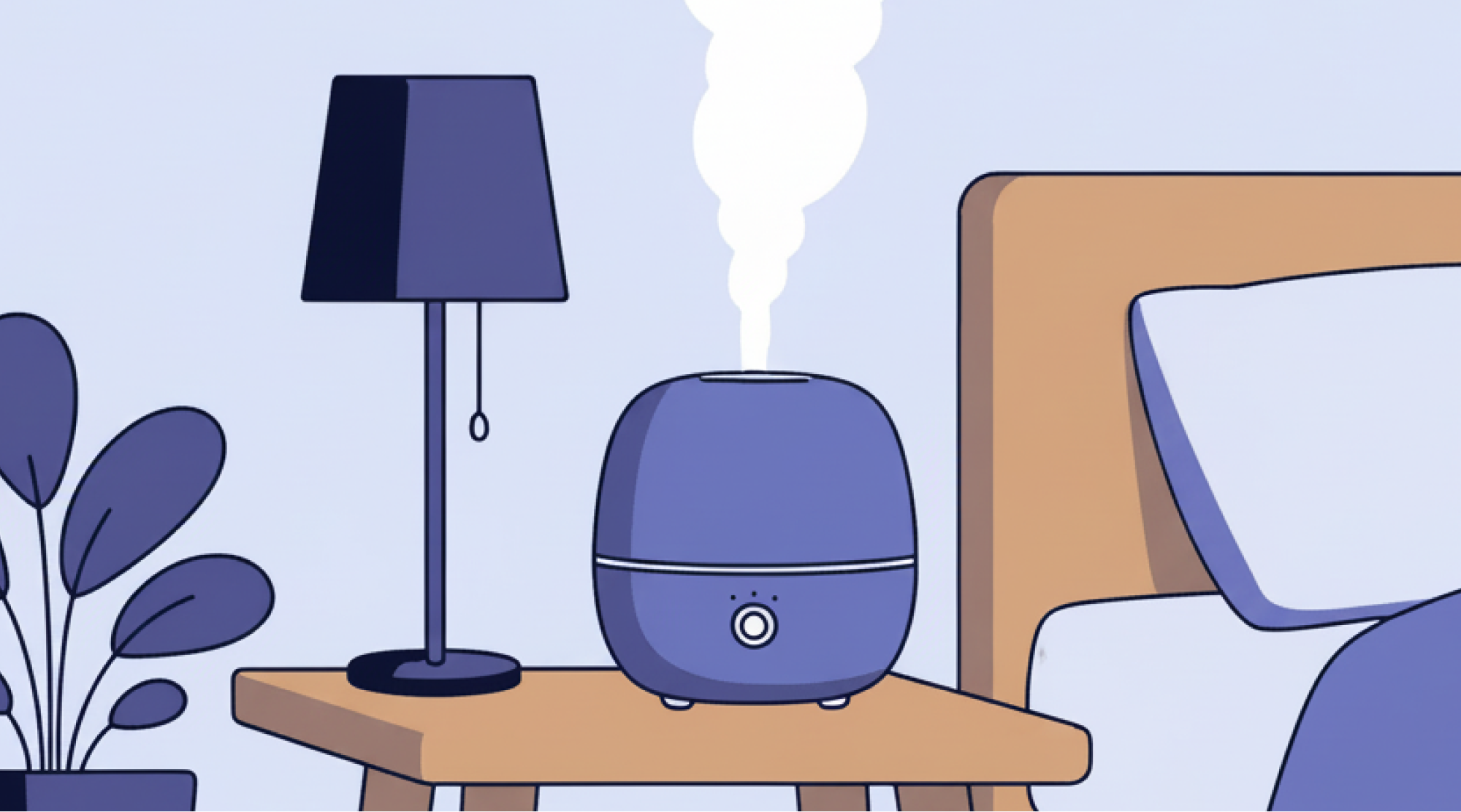
Position your humidifier on a flat, waterproof surface at least two feet from walls and furniture. Keep it three to four feet from your bed: close enough to provide benefits, far enough to avoid creating excessive moisture right where you sleep.Never place your humidifier directly on carpet or wood furniture, as moisture can cause damage over time. Use a waterproof tray or mat underneath for protection.Water Quality Matters
Use distilled or demineralized water when possible. Tap water contains minerals that become airborne when vaporized, creating white dust deposits on furniture and potentially irritating your lungs.If distilled water isn't a practical solution for you, look for a humidifier with a demineralization cartridge, or choose an evaporative model that naturally filters out minerals.Maintenance Is Essential
A poorly maintained humidifier can spread bacteria or mold into your air, defeating its health benefits entirely.Follow this maintenance schedule:- Daily: Empty the tank, rinse with hot water, and air dry
- Weekly: Deep clean with white vinegar or manufacturer-recommended solution
- Monthly: Replace filters if applicable and check for mineral buildup
- Before storage: Thoroughly clean and dry all components
Signs You Need a Humidifier
Your body provides clear indicators when humidity drops too low. Watch for:Physical symptoms:- Waking with a sore throat or dry mouth
- Frequent nosebleeds, especially during winter
- Persistently cracked lips despite using lip balm
- Itchy, flaking skin even with regular moisturizer use
- Static shocks when touching objects or people
- Eye irritation, particularly for contact lens wearers
- Cracks developing in wooden furniture
- Houseplants struggling despite proper watering
- Persistent static in clothing and hair
- Gaps appearing in hardwood flooring
- Paint or wallpaper peeling at edges
Common Concerns and Solutions
Over-Humidification
While proper humidity provides significant benefits, excessive moisture creates its own problems. Humidity above 50% can promote dust mites, mold growth, and window condensation.Prevent over-humidification by:- Using a humidistat to monitor levels
- Selecting appropriately sized units for your room
- Running the humidifier only when needed
- Ensuring adequate bedroom ventilation