Buying Guides
Published May 4, 2026
7 minBest Firm Mattress Topper: When and Why You Actually Need One
Some sleep problems are about the mattress, but others are just about the surface. Here's why a firm topper is often the fastest fix.

Table of contents
What a Firm Mattress Topper DoesSigns You Actually Need A Firm Mattress TopperWho Should (and Shouldn't) Use a Firm TopperWhat to Look forFirm Topper or New Mattress?FAQ
If your bed has gotten too soft (or never felt quite right to begin with) a 2-inch firm memory foam topper can make a real difference. Here's how to know if that's actually your problem, and what to look for when you shop.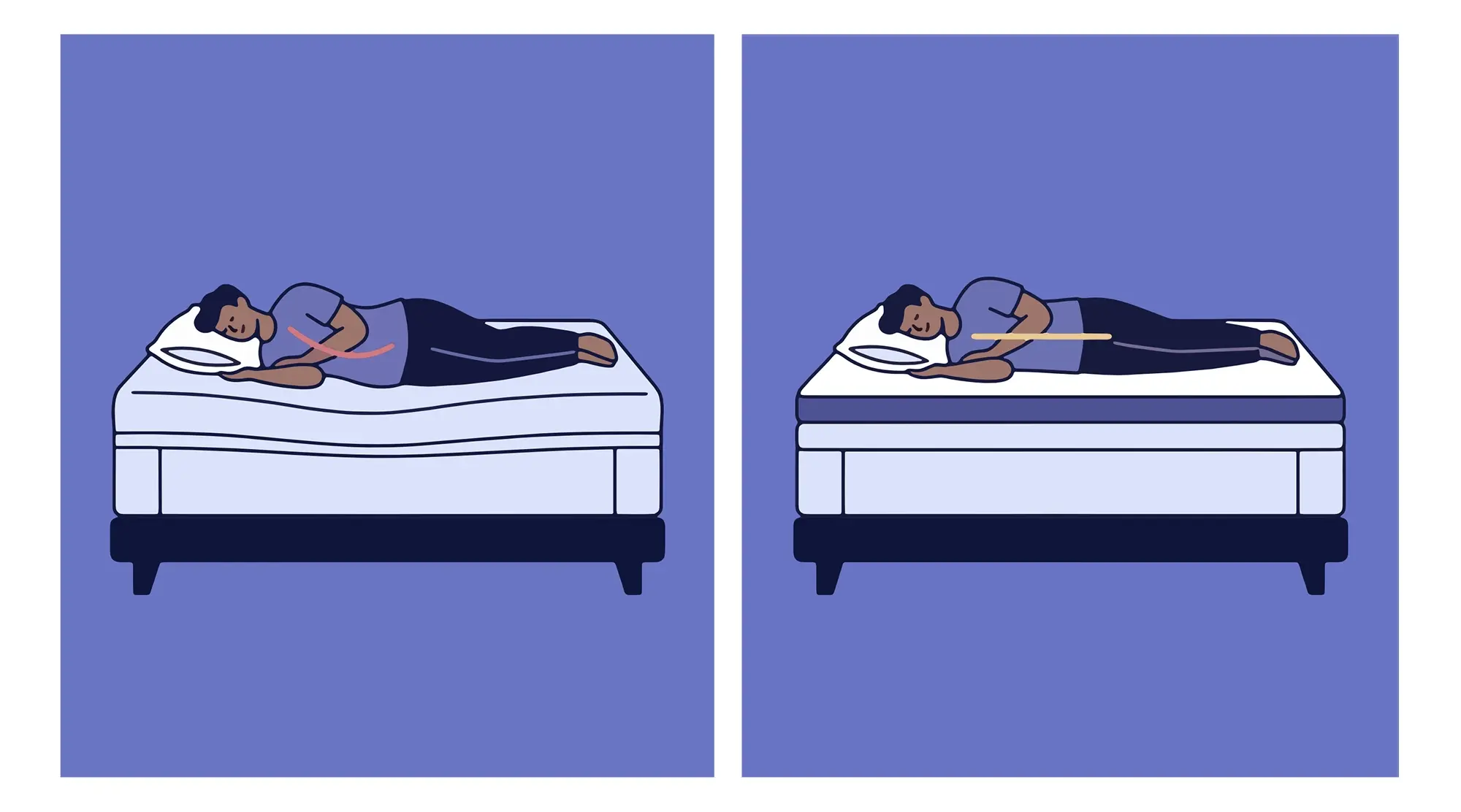
What a Firm Mattress Topper Does
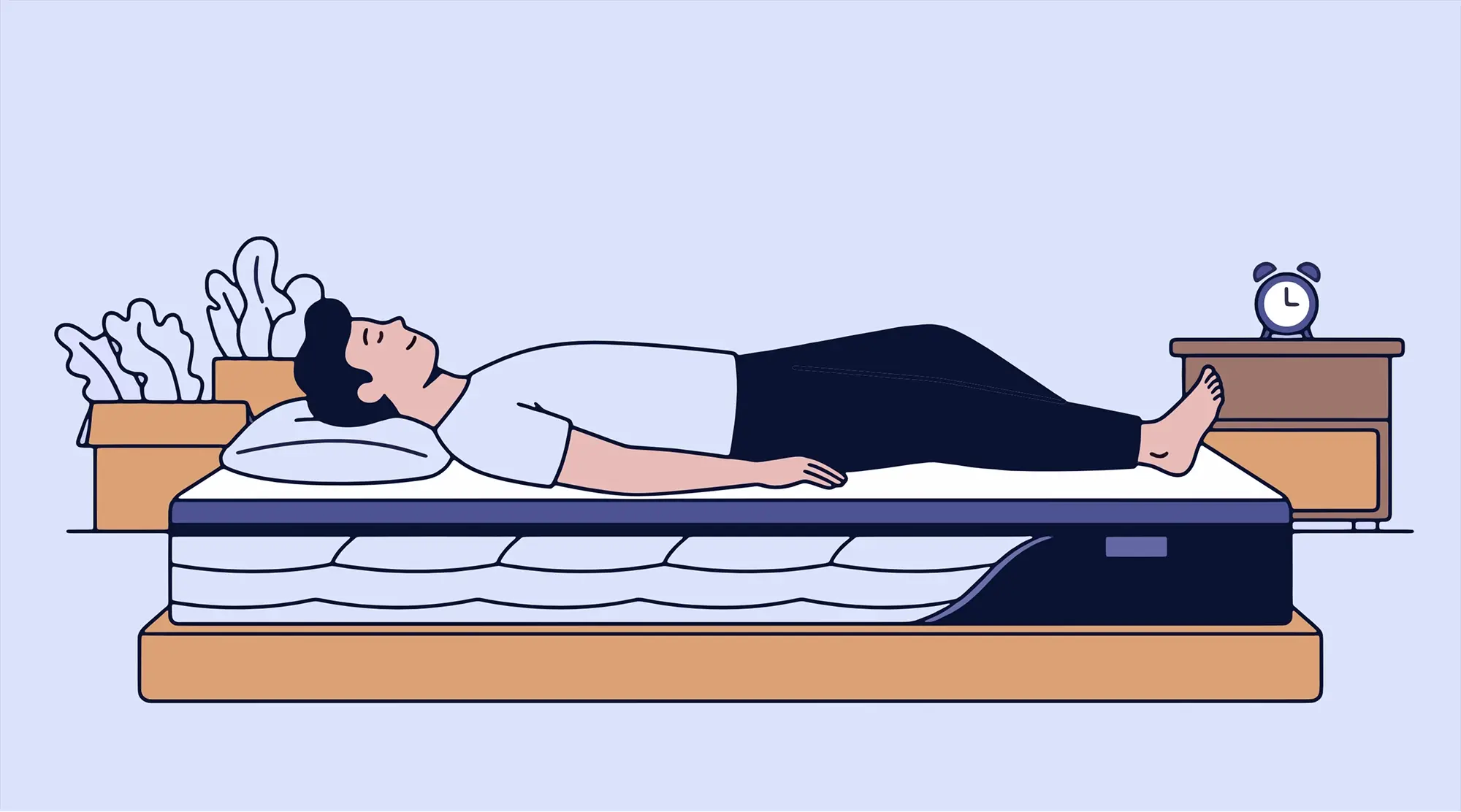
A mattress topper sits on top of your existing mattress and changes how the sleep surface feels. A firm one — specifically high-density memory foam — adds structure and pushback, cutting down on the sink-in feeling that some sleepers find uncomfortable.One thing it won't do: fix a structurally damaged mattress. Visible body impressions, sagging edges, broken-down coils: that's a foundation problem a topper can't solve. But for a mattress that's lost some surface resilience, or one that was always a little too soft for how you sleep, a firm topper meaningfully changes your night-to-night feel.In other words: the mattress underneath still matters. A firm topper over a collapsed foundation just puts a firm layer on top of an unstable one. A firm topper over a mattress that's still sound but too plush for your needs? That's where it earns its keep.Not sure which mattress fits you best? Find out now.
Signs You Actually Need A Firm Mattress Topper
You sink in more than you'd like. If you wake up feeling swallowed by the bed, or spend the first few minutes of your morning with a stiff lower back, your sleep surface is probably softer than your body needs.You're a back or stomach sleeper who wakes up achy. Back sleepers need their hips and spine to stay aligned — not drop into a soft surface. Stomach sleepers need even more resistance. A soft mattress lets the midsection bow downward, which puts real strain on the lumbar spine. Adding a firm topper will help keep everything level.Your mattress has softened over time. Memory foam compresses with use, and a mattress that felt right five years ago may have given more than you'd want. A firm topper is a cost-effective way to restore some of that original resistance before committing to a full replacement.You share a bed, and one of you needs more support. A topper shifts the feel for both of you — cheaper and easier than replacing the whole mattress.What a firm topper won't fix: body impressions deeper than about an inch, broken-down coils, edge collapse, or any mattress past its useful life. If the structure is the problem, no topper solves it.Who Should (and Shouldn't) Use a Firm Topper
Back sleepers have the most to gain. Your lower back needs a surface that pushes back — without that resistance, the spine hyperextends into the mattress. The Nectar Firmer Mattress Topper is specifically built for sleepers who find their current surface has too much give.Stomach sleepers are right there with them. It's the sleep position that creates the most lumbar strain on a soft surface, and density is the simplest fix. Dense memory foam resists the downward bow that softer materials allow.Heavier sleepers often run into a firmness problem that lighter sleepers don't. What feels medium-firm at 150 lbs can feel noticeably soft at 220 lbs. A firm topper adds density where the surface has lost it under greater compression.Side sleepers are the exception. Firm surfaces concentrate pressure on shoulder and hip contact points — which side sleepers feel directly. A firm topper is typically not the right call here.What to Look for
Material: High-density memory foam holds its shape, adds resistance, and distributes pressure evenly. Gel memory foam helps regulate temperature — a feature worth looking for if you sleep hot, since any added foam layer can trap some heat.Thickness: Most firm toppers fall in the 2–3 inch range. Two inches adds structure without dramatically changing the feel of the bed, and that ends up being the right call for most sleepers. Three inches shifts the surface more aggressively, so be sure to take that into consideration when thinking about your sleep needs.Cover: A breathable, cooling cover makes a real difference in how the topper performs night after night. Look for cooling yarns or treated fabric that allows airflow.CertiPUR-US® certification: This certification means the foam has been tested for harmful substances and meets standards for emissions and durability. It’s a baseline check that’s definitely worth making before you buy.Trial period: Toppers feel different in person than on a spec sheet. At least 30 nights gives you enough time to know whether the firmness level is actually right for how you sleep.The Nectar Firmer Mattress Topper
Nectar's Firmer Mattress Topper is 2 inches of high-density gel memory foam with a soft-touch breathable cover featuring cooling yarns. Built for back sleepers, stomach sleepers, and anyone whose mattress has softened past their comfort point.The gel-infused foam helps regulate temperature — so you're not trading cooling for support. CertiPUR-US® certified. Comes with a 30-night home trial. Available in all standard sizes.Firm Topper or New Mattress?
A topper is the right call when the mattress underneath is structurally sound, but the feel is off. It's a targeted adjustment — not a workaround for a mattress that's genuinely worn out.A few quick checks before you decide:- Press down on the center and release. Does it spring back, or stay compressed? Foam that no longer rebounds has lost its resilience.
- Stand at the foot of the bed and look across the surface. Body impressions deeper than about an inch are a structural issue, and won’t be fixed by a topper.
- Under five years old and still structurally sound? A firm topper is a smart first step before replacing.
- Eight to ten years old and causing ongoing discomfort? A new mattress is the better long-term investment.