Sleep Health
Published June 24, 2026
8 minBest Sleep Positions for Back Pain (2026 Guide)
Your sleep position shapes how your spine loads and decompresses overnight. The wrong one can turn a manageable ache into a full morning routine.
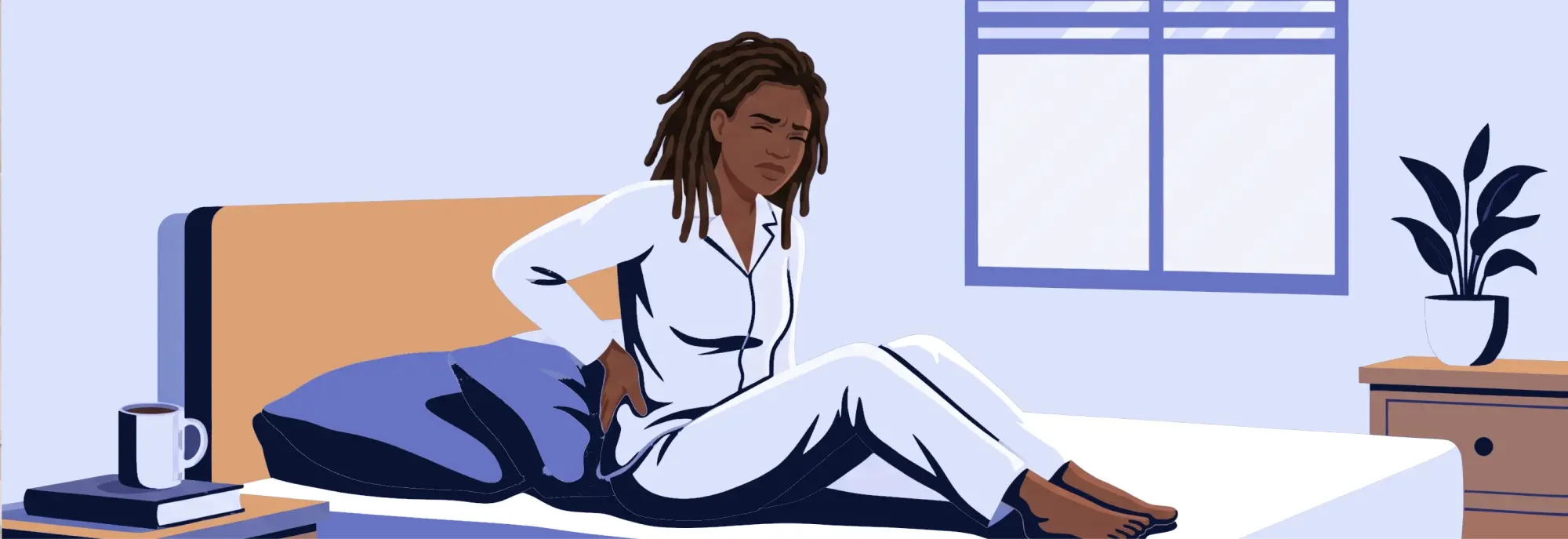
Table of contents
Why Sleep Position Matters for Back PainSleeping on Your Side: The Most Forgiving PositionSleeping on Your Stomach: Worth Avoiding If You Have Back PainSleeping on Your Back: Best for Spinal AlignmentPillow Placement Makes More Difference Than You'd ThinkWhat Your Mattress Is Actually DoingSmall Adjustments Make for Better MorningsFrequently Asked Questions
Most back pain isn't random. It's positional. The way you load your spine for seven or eight hours tends to explain a lot about what hurts when you wake up. The good news: a few adjustments — position, pillow placement, and the right surface underneath — can change things faster than you'd expect.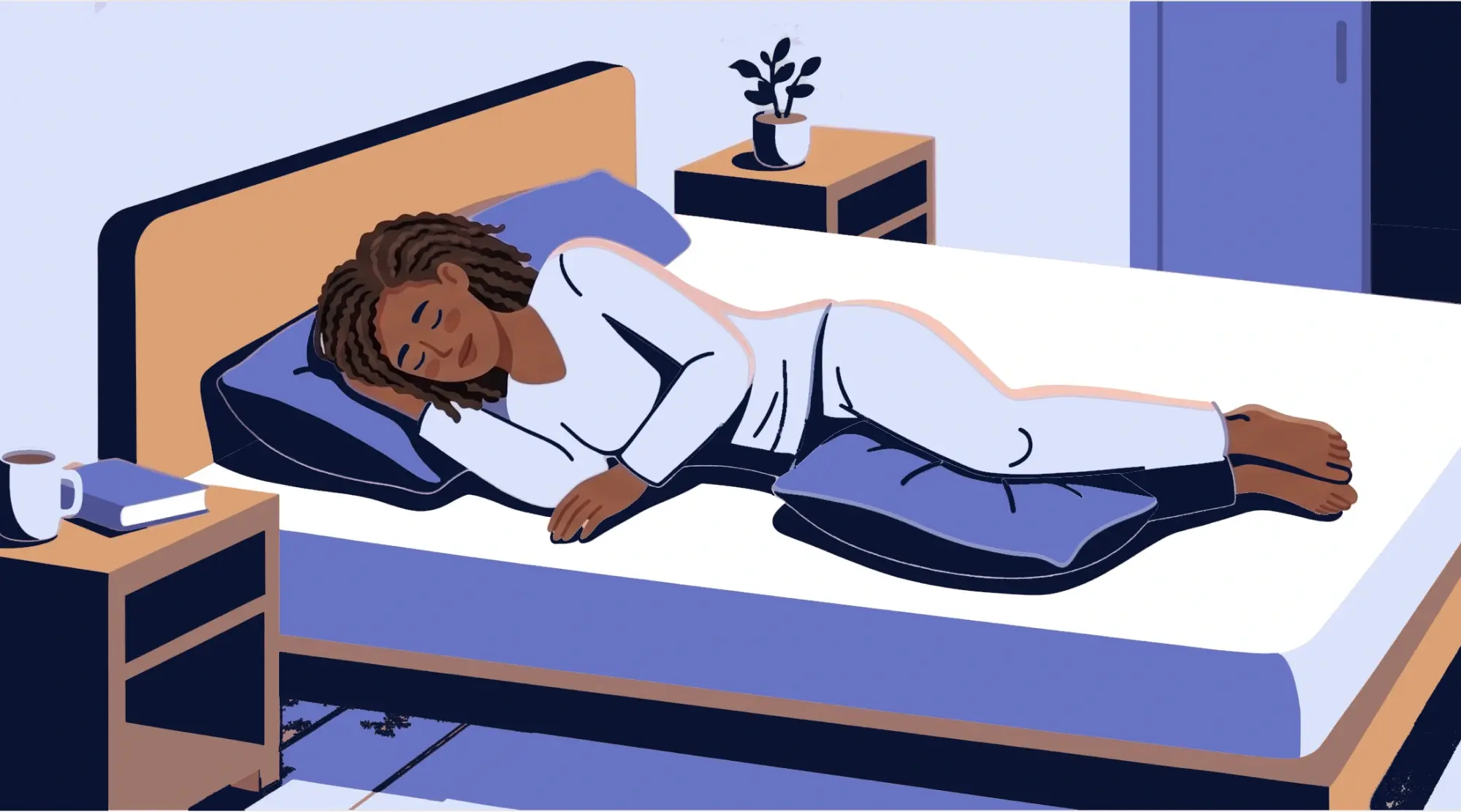
Why Sleep Position Matters for Back Pain
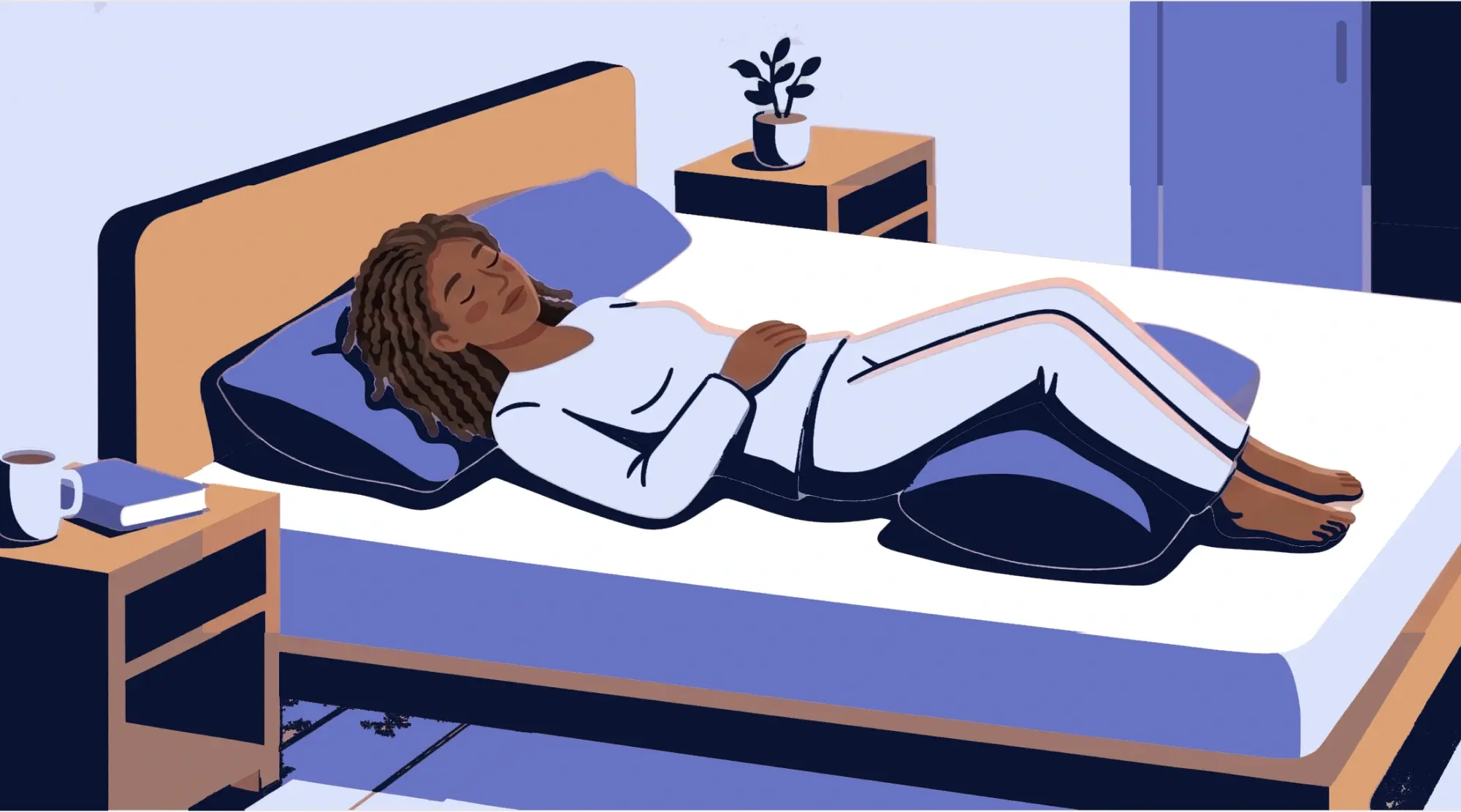
Your spine has a natural curve, and the goal while you sleep is to keep that curve supported without forcing it into a shape it just doesn't want to hold.When your hips drop too low, the lumbar curve collapses. When your head sits too high, your neck compensates. When you rotate through the torso, muscles can't fully let go. Your sleep position either works with your mechanics or against them – and trust us, it makes all the difference.It's also worth noting that your mattress and your position aren't independent variables. Even the most careful pillow setup won't fix a surface that lets your hips sink past the point of no return.Sleeping on Your Side: The Most Forgiving Position
Side sleeping is where most people land, and it tends to be back-friendly (with a few conditions).The main one: keep your hips stacked. When your top knee drops forward, it rotates the pelvis and pulls on the lumbar muscles throughout night. (If you’re struggling with this, sleep with a pillow between your knees. It might feel strange for about three nights, but you’ll eventually stop noticing it.)The other condition is maintaining proper shoulder alignment. If your mattress is too firm, your shoulder gets pushed inward and the rest of your spine tilts to compensate. If it’s too soft? Your shoulder sinks, dragging your neck with it. You want enough give to cushion your shoulder, but enough support that keeps your spine level.Side sleeping with a stacked hip and a neutral neck is probably the lowest-effort improvement most back pain sufferers can make. Luckily, it’s an incredibly easy fix.Sleeping on Your Stomach: Worth Avoiding If You Have Back Pain
Stomach sleeping puts your lumbar spine into extension and keeps your neck rotated to one side for hours. That combination can compress the small joints in the lower back — and your body tends to notice.If you're a committed stomach sleeper and the idea of switching feels impossible, we get it. Try a thin pillow (or no pillow at all) under your head, and a firmer pillow under your hips to reduce the lumbar arch. It won't fully solve the mechanics, but it takes some of the load off.That said, if your lower back pain is consistent and stomach sleeping is your default, position is probably the first variable worth changing. It might take a week or two to feel natural, but your mornings will likely thank you.